
The Skills Assessment at a Glance
This Skills Assessment enables all members of the university community to assess their digital competences. The test is designed for both students across all disciplines and stages of study and university staff working in research, teaching, and administration. It can provide particularly useful guidance on your digital competences at the beginning of your studies or when starting your career in higher education.
Each of the different modules takes approximately 15 to 20 minutes to complete. Afterwards, you will receive an evaluation of your results, detailed feedback, and specific recommendations for action to support the further development of your digital competences.
Which competences does the Skills Assessment cover?
The Skills Assessment is based on the DigiHEARTS competence framework (Digital Competence Framework for Higher Education: Administration, Research, Teaching, and Studying), which was developed specifically for the higher education context. It covers digital competences that are relevant across different areas of work and application. The development of the competence framework was based on a comprehensive literature review and a needs assessment involving university staff and students from different academic disciplines and areas of work, with varying levels of professional and study experience.
The Skills Assessment covers the following competence areas, which are assessed using knowledge-based questions and self-assessment questions (marked with an *):
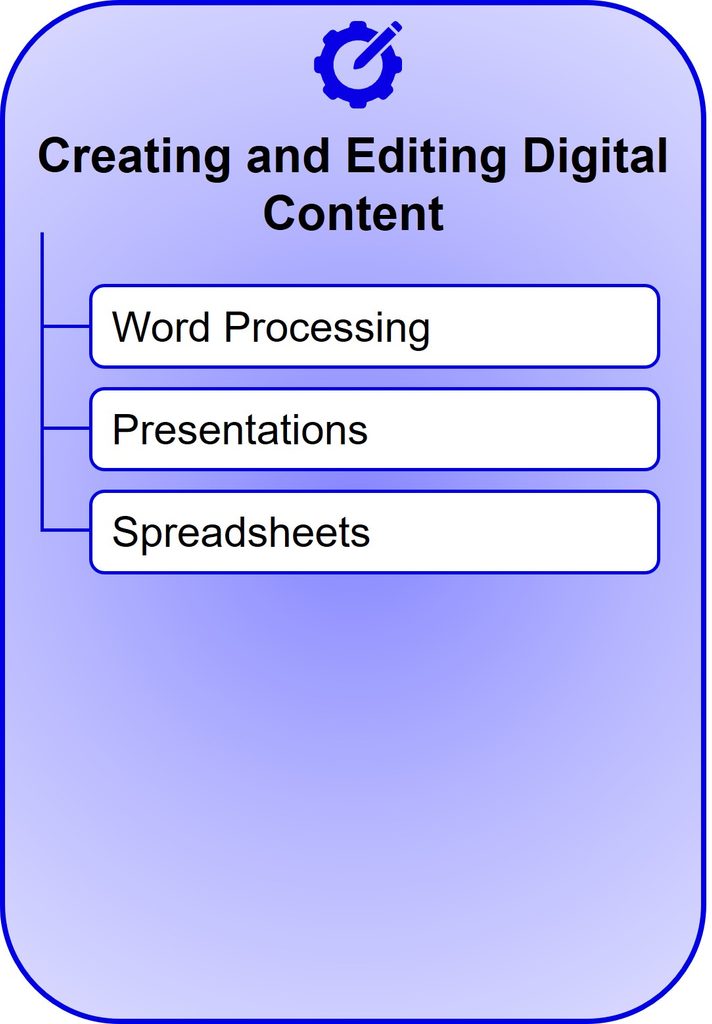
The competence area ‘Creating and Editing Digital Content’ encompasses the ability to create, edit, and adapt a wide range of digital formats, such as texts, presentations, and spreadsheets, for specific purposes and contexts.
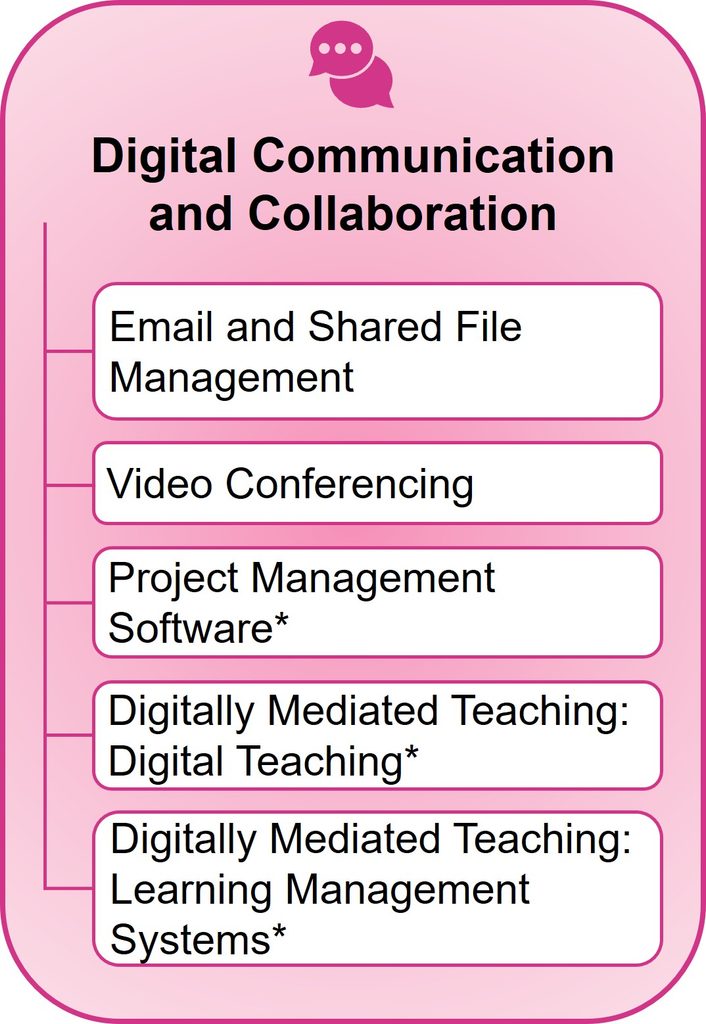
This competence area focuses on the ability to use digital technologies effectively and purposefully for communication and collaboration. This includes using appropriate communication and collaboration tools, such as email, video conferencing, project management tools, and collaborative document editing, as well as selecting these tools according to specific purposes and target groups.
The sub-area ‘Digitally Mediated Teaching’ encompasses the knowledge and ability required to integrate digital technologies into teaching in order to create different learning opportunities, accommodate individual learning needs, and support the achievement of teaching objectives.
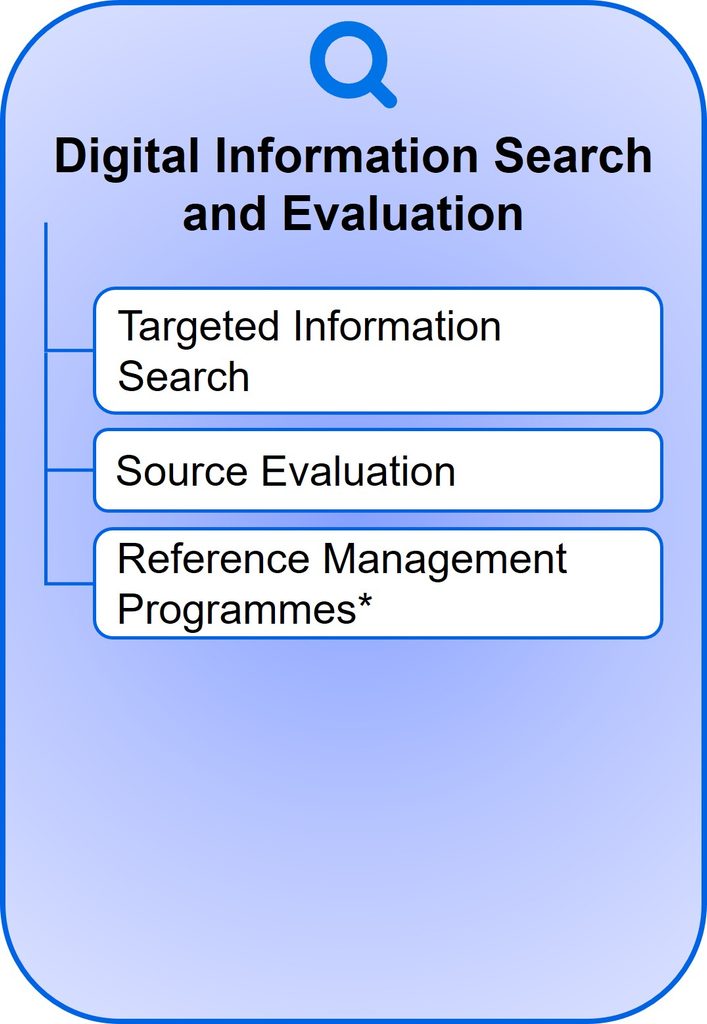
The competence area ‘Digital Information Search and Evaluation’ encompasses the ability to clearly define information needs in order to search for relevant information in digital environments in a targeted and systematic manner. Key aspects include applying effective search strategies using keywords and filters and selecting appropriate information sources, such as general search engines or subject-specific databases.
In addition, this competence area includes critically evaluating the quality, relevance, and trustworthiness of the information found, as well as systematically organising and storing search results using appropriate tools, such as reference management programs.
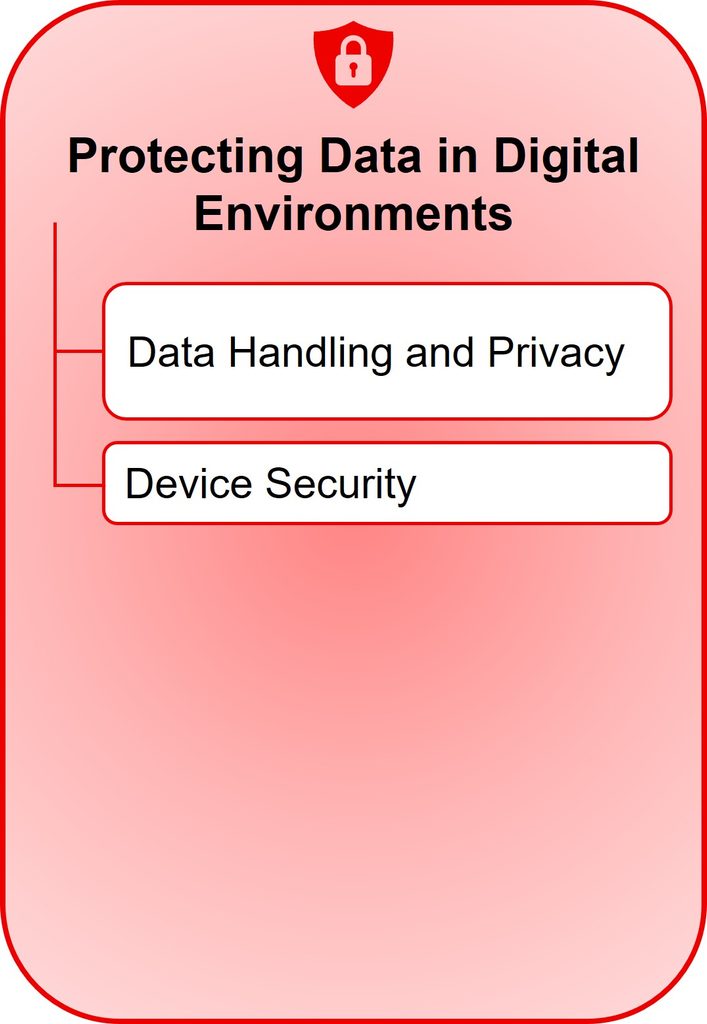
The competence area ‘Protecting Data in Digital Environments’ encompasses understanding and applying fundamental principles and measures for protecting digital information and systems. This includes knowing how to securely process and share personally identifiable information, recognising potential risks and threats, and understanding appropriate measures to protect data and devices against unauthorised access, misuse, or damage. The aspect of data backup includes knowledge and strategies for protecting data against loss, for example, through regular backups or the use of secure storage solutions.
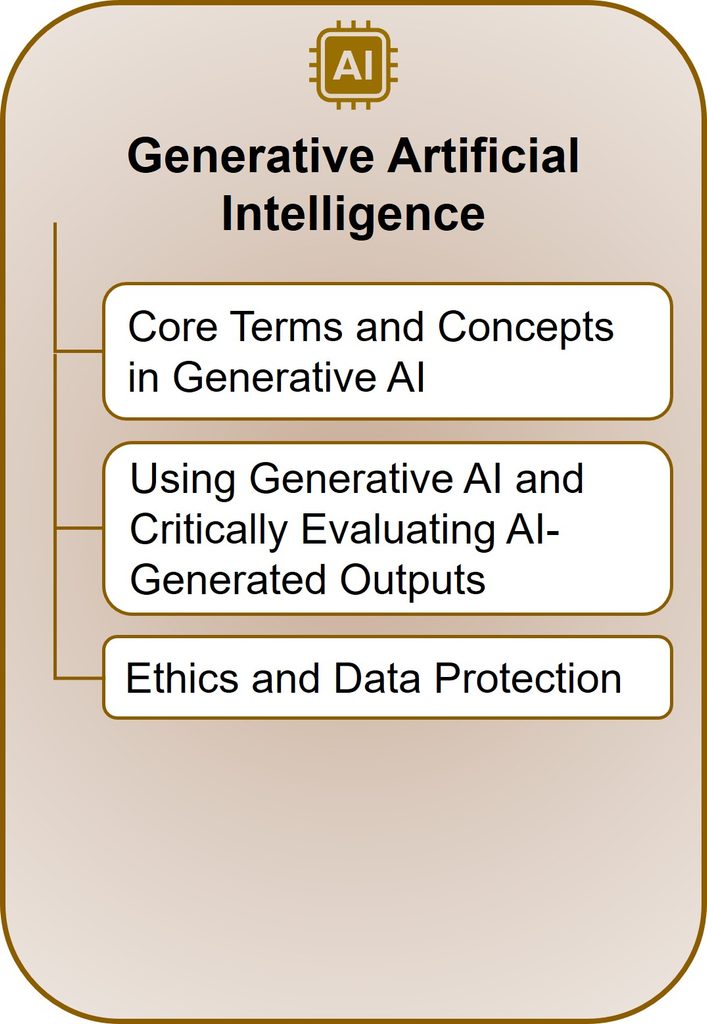
This competence area encompasses the ability to understand and use generative artificial intelligence (AI) and to critically evaluate its outputs. Key aspects include effective communication and collaboration with generative AI, as well as knowledge of fundamental AI concepts, algorithms, machine learning, and the ethical and data protection implications of AI applications.
How were the test questions developed?
Piloting the Content and Test Questions
The specific test questions were developed through a multi-stage process. First, an extensive pool of potential questions and content was compiled based on scientific literature. In addition, training and professional development courses offered by higher education institutions were analysed. This analysis helped identify topics relevant to practical applications and assess which knowledge could be expected at different levels of difficulty.
The previously conducted needs assessment also informed the development of the test. The assessments provided by the higher education staff and students surveyed helped determine the relevance of the content for different target groups and identify missing or less relevant topics.
Based on this preliminary work, specific test questions were adapted from the literature or newly developed. These were then reviewed in think-aloud interviews with experts and subsequently subjected to an additional expert rating to assess their relevance and difficulty. Finally, a pilot study involving members of the target groups was conducted (n = 40). Based on the empirical data obtained, the questions were reviewed again, and the final selection was made for subsequent validation.
Psychometric Validation in the Main Study
The Skills Assessment was empirically tested with a large sample of 3,103 students and higher education staff. Among other aspects, the study examined whether test results were associated, as theoretically expected, with relevant prior experience, other measures of digital competence, and attitudes and motivation towards using digital technologies.
The results showed that bachelor’s students achieved lower scores on average than master’s students, while staff achieved the highest scores. As expected, this pattern corresponded to increasing experience of working with digital technologies in the higher education context. A positive association was also found between the proportion of IT-related activities in participants’ everyday studies or work and their test results. Furthermore, participants who rated their digital competences more highly on validated self-assessment scales also achieved higher scores on the Skills Assessment. Higher test scores were also associated with more positive attitudes towards working with digital devices and applications.
Overall, the various analyses show that the results of the Skills Assessment are associated with relevant external criteria in theoretically expected ways and that the test can capture differences between individuals with varying levels of competence and experience.
A link to further information will be provided shortly.
Interested? Start the Skills Assessment now!